
Understanding Horses as Prey Animals
How Horses See the World
Horses are prey animals, which means in the wild they survived by staying alert and avoiding danger.
Because of that, today’s horses are:
- Quick to notice movement
- Sensitive to sounds, smells, and body language
- Always paying attention to what’s around them
Horses are naturally wired this way to keep themselves safe.
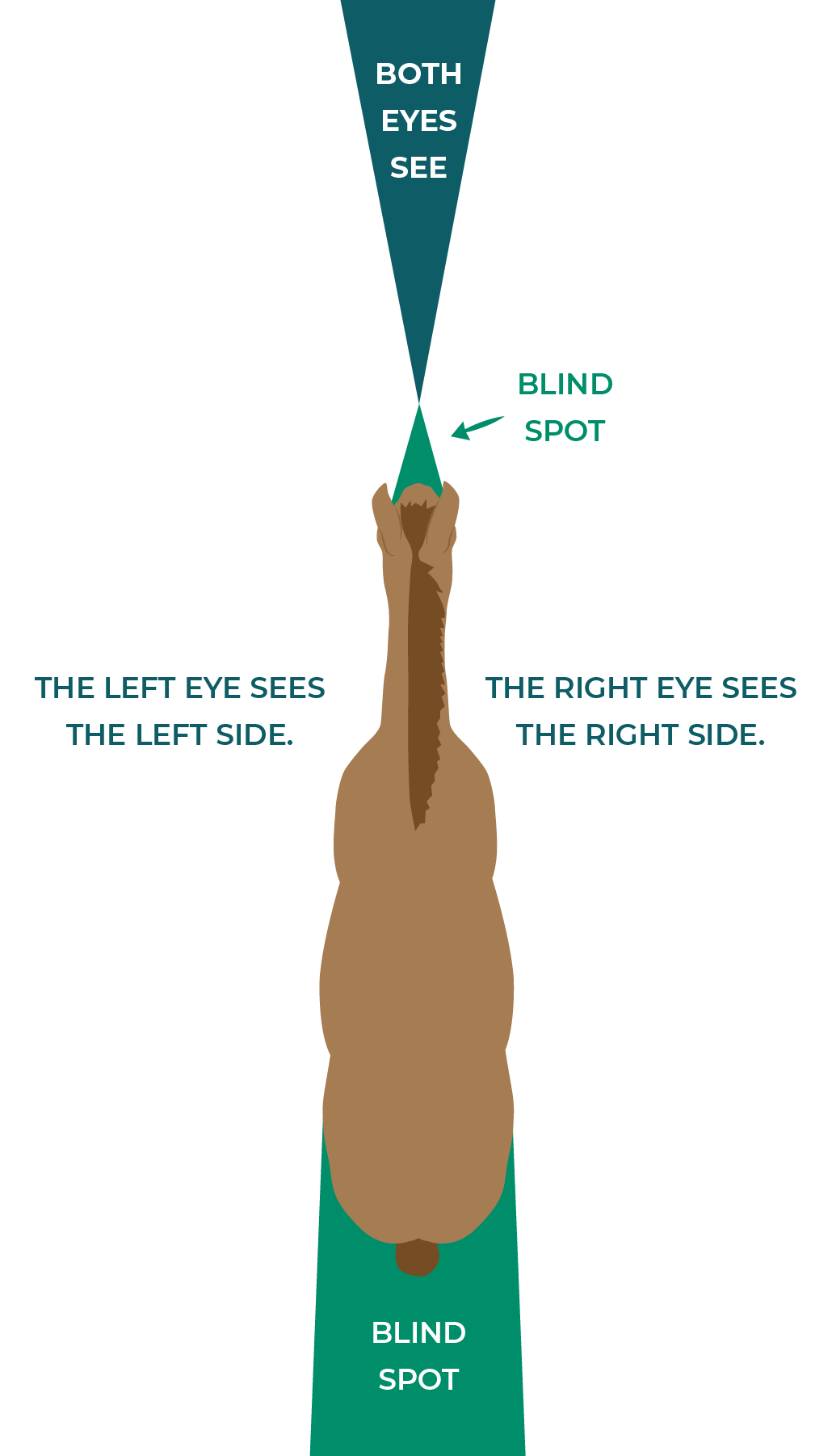
Horses Don’t See Like We Do.
They have blind spots directly in front and behind them.
They see their left side with just their left eye, and their right side with just their right eye.
They can focus with both eyes in front just past their blind spot.
Big Bodies + Fast Reactions
A horse can weigh 1,000 pounds or more. They can’t claw, bite, or pounce like predators, so their best defense is to:
- Jump sideways or spook
- Kick behind to protect themselves
- Rear up on their hind legs to scare off predators
- Gallop away
Most reactions happen before a horse even thinks.
This is why calm behavior from humans matters.

Why We Move Quietly Around Horses
When a horse is suprised, it can:
- Startle or spook
- Step sideways
- Swing its head
- Walk or trot off
- Kick out behind
To keep everyone safe:
- No running
- No shouting
- No sudden grabbing
- Always let horses know you are there with a soft voice

Body Language Basics
Horses speak clearly with their body language.
Ears

Ears Forward
Curious

Ears Sideways
Relaxed

Ears Pinned Back
Irritated or upset
Eyes

Soft and Half-closed
Relaxed or sleepy

Open and Alert
Curious

Wide and Showing White
Worried or scared
Tail

Still and Quiet
Relaxed

Wringing Sharply
Irritated

Swishing Slowly
Shooing flies

Raised
Excited
Feet

Back Leg Propped
Relaxed or resting

Restless Stomping
Anxious or uncomfortable

Pawing
About to lay down or impatient
Learning to “read” horses teaches you when to approach, and when to give space.
You can learn more about horse behavior in the Understanding Horse Communication Course.
Your Personal Space Bubble & Theirs
Humans and horses both need a safety bubble. Always respect a horse’s space, especially around:
- Hindquarters (where the kick zone is)
- Mouth (teeth)
Approach horses near their shoulder where they can see you. Never sneak up behind them.
